

Sciatica in Nairobi: Why the Leg Pain Keeps Coming Back, and What Helps
Sciatica is a symptom, not a diagnosis. Here is why that burning, shooting pain down the leg keeps coming back, when to see a doctor first, and what actually helps long term.
Sciatica is one of the most common reasons people walk into our studio in Westlands. It usually starts as a dull ache in the lower back or buttock, and then one day it shoots down the back of the leg: burning, tingling, sometimes all the way to the foot. Sitting in Nairobi traffic makes it worse. So does a long day at the desk.
Most people are given rest and painkillers. That calms a flare-up, but for many it comes back a few weeks or months later. This article explains why, what the warning signs are, and what we do differently.
First: sciatica is a symptom, not a diagnosis
"Sciatica" describes pain that follows the path of the sciatic nerve, from the lower back through the buttock and down the leg. The nerve is irritated or squeezed somewhere along that path. Common reasons include:
- A disc pressing on a nerve root in the lower back, often after years of sitting and bending under load
- A tight or overworked piriformis, a small muscle deep in the buttock that the nerve passes beside or through
- Narrowing of the spaces in the spine, more common after 50
- The way you move: hips that do not move well, glutes that have switched off, and a lower back that ends up doing work it was not built for
That last one matters most for recurring sciatica. Even when a scan shows a disc problem, the reason the area keeps getting overloaded is usually a movement pattern. Fix the pattern and the nerve gets room to settle.
See a doctor first if you have any of these
Some symptoms need medical attention before any exercise programme. Go to a doctor or hospital promptly if you have:
- Numbness in the groin, inner thighs or around the back passage
- New problems controlling your bladder or bowels
- Weakness that is getting worse, such as a foot that drags or slaps when you walk
- Sciatica after a fall, accident or injury
- Fever, unexplained weight loss, or a history of cancer alongside the pain
- Pain in both legs at once
We are a corrective exercise studio, not a clinic. If we see any of these signs at your assessment, we refer you to a doctor before we start.
Why sciatica keeps coming back
When the pain settles, it is tempting to think the problem is gone. Usually, the load that irritated the nerve is still there. The most common patterns we see in clients with recurring sciatica:
- Long hours of sitting. Sitting compresses the discs of the lower back and shortens the hip flexors. Eight hours at a desk plus two in traffic is a heavy daily dose.
- Glutes that do not fire. When the buttock muscles are weak or switched off, the lower back and the piriformis take over. The piriformis tightens, and the nerve gets irritated.
- Stiff hips. If the hips cannot rotate or extend fully, the lower back moves instead, every step, every time you bend.
- Bending with a rounded back to lift children, shopping or a gym bar.
- Feet and gait. Flat or rigid feet change how force travels up the leg into the pelvis.
The pain shows up in the leg. The reason it keeps coming back is usually in how you sit, stand and move.
What helps, long term
The goal is to give the nerve space, calm it down, and then remove the reason it was being irritated. That is a sequence, and it works best when done in order:
- Calm it down. Gentle movement is usually better than full bed rest. Short walks, changing position often, and avoiding long spells of sitting help most people.
- Release what is tight. Hands-on work such as myofascial release around the hips, buttocks and lower back can ease tension that is adding pressure.
- Restore movement. Hip mobility, mid-back mobility and controlled spine movements, chosen for what your assessment shows.
- Rebuild strength. Glutes, deep core and the muscles that keep your pelvis steady, progressed slowly so the nerve is not provoked.
- Change the daily load. How you sit, how you lift, your desk setup, and how often you get up.
Three things you can try today
- Break up sitting. Stand up and walk for two minutes every 30 to 45 minutes. Set a phone reminder.
- Glute bridge. Lie on your back, knees bent, feet flat. Squeeze your buttocks and lift your hips until your body makes a straight line from shoulders to knees. Hold for two seconds and lower slowly. 2 sets of 10, pain-free range only.
- Walk. A 15 to 20 minute walk on flat ground most days helps many people with sciatica more than lying down.
If any exercise sends pain further down your leg, stop and get assessed.
How we work with sciatica at Wellness Solutions Africa
Every client starts with a 60-minute postural assessment. We look at how you stand, sit, bend and walk, how your hips and spine move, and which muscles are doing too much or too little. If your feet look like part of the problem, we add a foot pressure mat assessment.
From there, most sciatica clients follow our Pain Relief pathway: myofascial release to ease the tension, then corrective exercise to retrain the patterns behind the pain. You do the work with a coach through a monthly membership, so it continues between visits instead of stopping when the pain fades.
Not sure where to start? Take our free 60-second posture screen online, or book your assessment at our studio in Westlands, Nairobi.
This article is general information, not medical advice. If you have any of the warning signs above, see a doctor first.
Ready to
get started?
Take the free posture screen — instant results — or book directly with our team in Nairobi.
Keep going.
Personal Trainer vs Corrective Exercise Specialist: Which Do You Need?
Both will make you train. Only one starts by finding out why your back, knees or shoulders keep complaining. Here …
Read →
Lower Back Pain That Won't Go Away: Why It Keeps Coming Back and What Finally Fixes It
If your lower back pain disappears and returns on a predictable cycle, the problem is not the flare-up — it …
Read →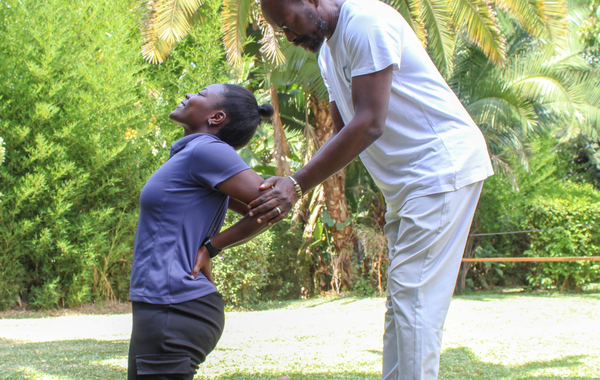
The Best and Worst Exercises for Back Pain (Ranked by a Corrective Therapist)
Not all exercise helps back pain. Some of the most commonly recommended movements make the underlying pattern worse. Here is …
Read →